How Wedding Flowers Are Designed at Bluestone Botanique? — Inside a Wedding Florist’s Mind
Wedding flowers are much more than choosing something beautiful.
As a New Hampshire wedding florist specializing in seasonal, garden-inspired wedding flowers, my work begins long before I touch a single stem. Every arrangement you see on a wedding day is the result of observation, research, and many intentional decisions.
Today, I’d like to take you behind the scenes — into the thinking that shapes each design — and show you how your wedding flowers become what they are.
At Bluestone Botanique, every floral decision is guided by three essential elements:
The Couple.
The Season.
The Setting.
These three pillars influence everything — from flower selection and color palette to scale, layout, and installation mechanics. All three work together to create a cohesive floral vision.
Designing for the Couple: People before stem
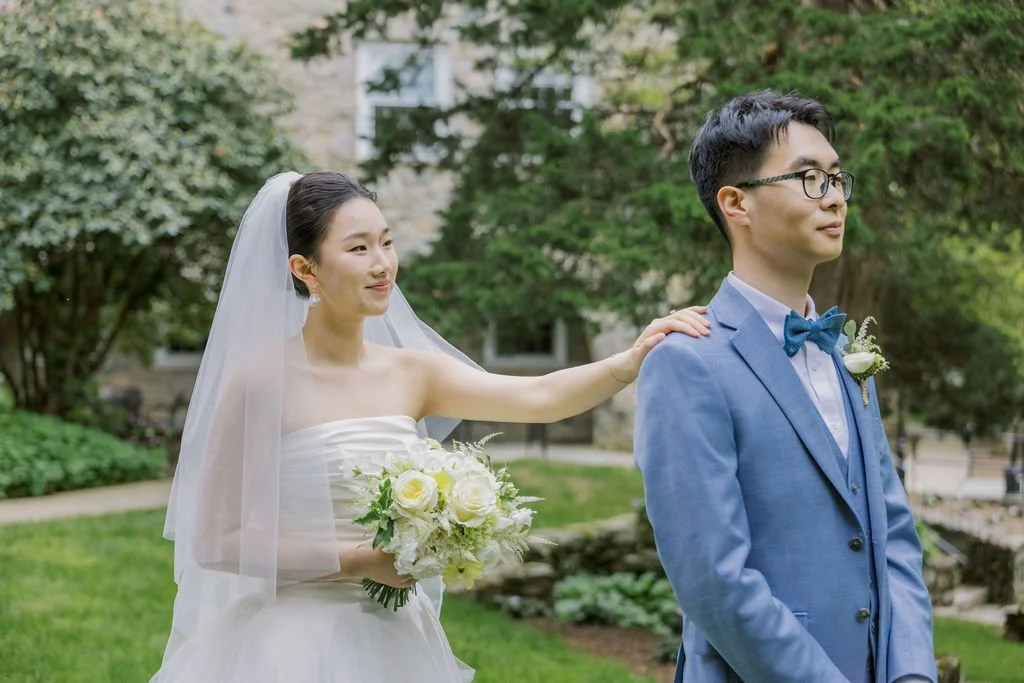
Every design begins with you.
From the moment I receive your inquiry and read your questionnaire, I begin forming a mental picture of you and your wedding. During our consultation, we are not just discussing flowers, I'll take time to understand you as a couple, listen to what you love and what inspires you.
Often, I choose what I call a “theme flower” — a bloom that captures the bride’s personality.
It might be:
Butterfly ranunculus — like a gentle, soft kiss on the cheek
Poppy — joyful and colorful pop of colors
Anthurium — sculptural and modern full of characters
Garden rose — romantic and feminine
Peony — refined and luxurious
Or sometimes, not even a flower at all, but wild grasses that echo a free-spirited soul
From there, color follows personality.
Are you a low key person, drawn to muted tones and quiet elegance? Do you love pastel and romantic colors? Are you an outgoing person, gravitate toward vibrant, high-energy palettes that fill a room with presence? Or are you the quirky one, who wants an unconventional color combination?
Your personality becomes the foundation of the floral language.
Designing with the Season: Letting Nature Lead
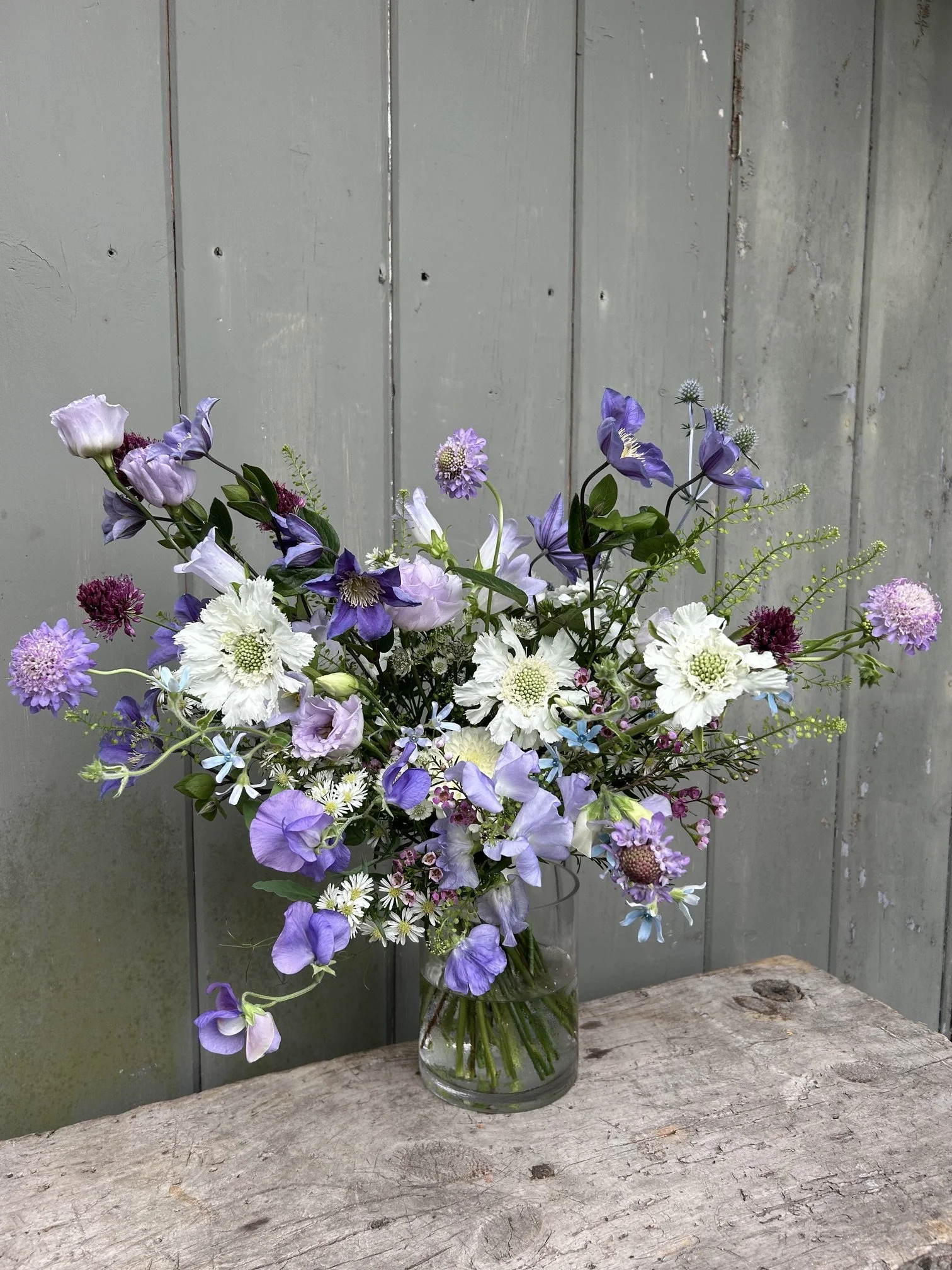
A bridal bouquet featuring sweet pea, scabiosa, drumstick allium, and sea holly grown from my own garden.
As both a florist and a gardener, I observe nature closely and incorporate as many local flowers as possible into my designs. I custom grow unique flowers for my bride, including sweet peas early in the season, and dahlias in late summer and fall.
Choosing flowers in season not only guarantees freshness and quality, it also reflects the very month you are getting married in.
Local flowers correspond with the rhythm of the year.
Hellebores, also known as the Lantern Rose, push through the snowy winter ground.
Daffodils signal the joyful arrival of spring. Sweet peas perfume the early summer air. Hydrangeas remind us of relaxed summer days by Cape Cod. Dahlias reign as the queens of fall, their vibrant tones echoing the changing leaves.
When you hire a professional wedding florist, you are not only hiring someone to assemble arrangements — though craftsmanship is essential. You are also relying on the florist's knowledge of hundreds of flower varieties, an understanding of when each bloom is at its peak, and the expertise to handle every stem so it holds up throughout the wedding day.
In nature, flowers rarely bloom alone; they grow in communities and intertwine with other varieties. My designs reflect that same richness and complexity. Rather than relying on only a few blooms, a single arrangement often incorporates fifteen or more distinct specialty varieties, each chosen for its color, form, and texture, and layered intentionally to create natural movement and depth.
I often think of it as conducting an orchestra. Each flower is an instrument playing its role. Some carry the melody — bold and expressive, meant for the spotlight. Others weave lightly throughout, adding air and movement. And some hold the low notes, anchoring the piece with depth and strength.
The beauty lies in orchestrating them in harmony — with seasonality as the guiding score — to create a three-dimensional composition that brings a space to life.
Designing Within the Setting: Flowers That Respond to the Space
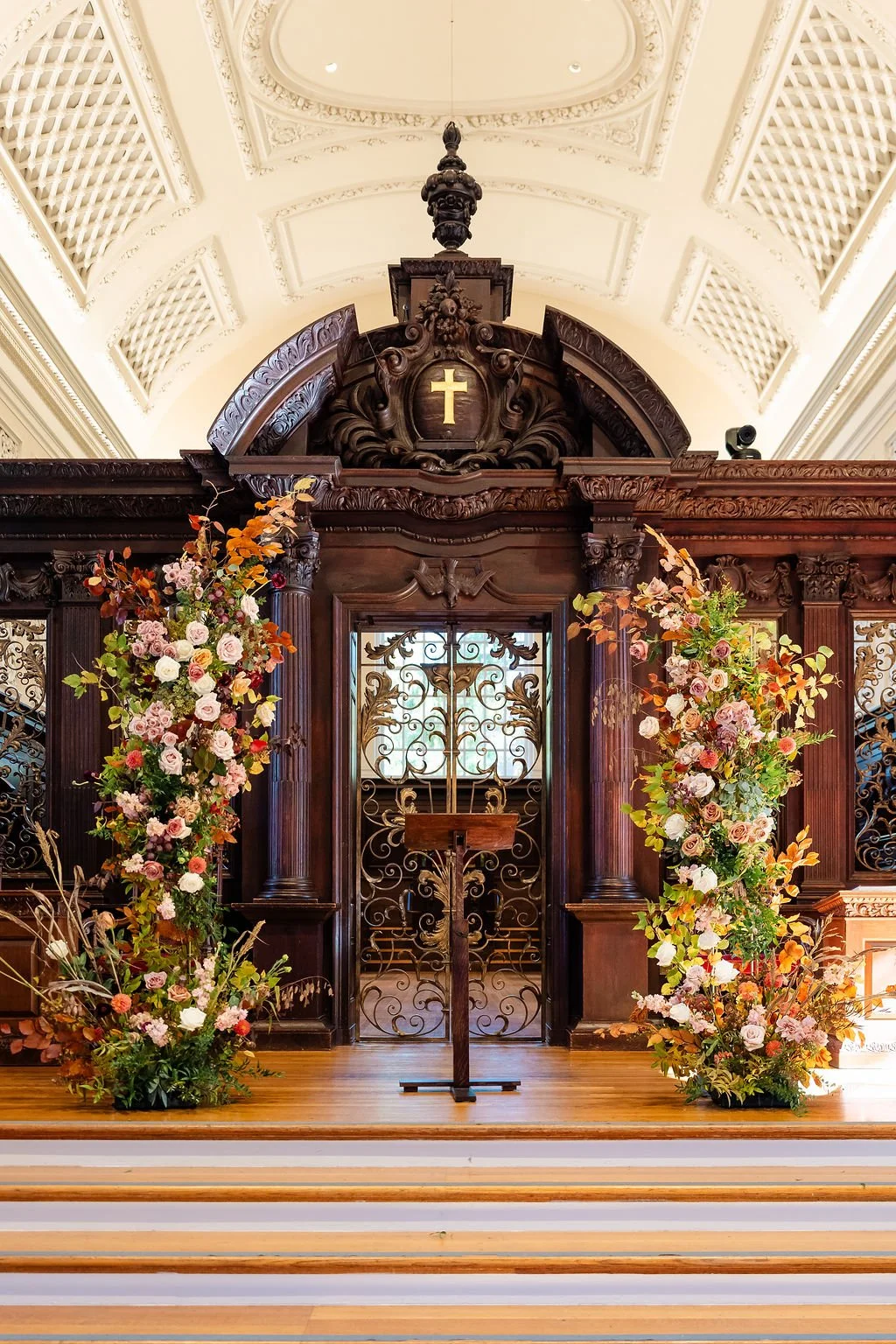
A floral arch that echoes the shape of the church's altar gate.
Floral design must respond to the space and its architecture.
A historic estate surrounded by gardens naturally invites a more natural and organic aesthetic. A modern industrial venue may call for cleaner lines and sculptural forms.
Scale is equally important.
A cathedral ceiling requires a different design approach than an intimate room. A ten-foot arbor demands a larger floral structure than a six-foot one. (Yes, I have designed large-scale installations while carefully balancing on a ladder.)
Just like sound: a whisper carries clearly in a small room, but disappears in a stadium. Flowers must be proportionate to their surroundings. The larger the space, the more scale and presence are needed to create impact.
I also look for opportunities within the venue for special floral moments — a character-filled gate, a pergola with climbing vines, an arch under a mature tree, an intricate staircase. These architectural details offer chances to create unique design that only belongs to your setting.
When you fill out your venue on the inquiry form, my research begins. I search for photos both indoor and outdoor, looking at scale, layout, and other details.
Further along the design process, I often visit the venue in person to measure and study the space carefully. A floral design must be both structurally sound and aesthetically pleasing — securely engineered to hold its form, yet blending naturally within the setting.
Why the Questionnaire & Consultation Matter
This is why I ask couple to complete a questionnaire after inquiring, and why we schedule a consultation before any design begins.
Your questionnaire isn’t paperwork. It’s the foundation of your floral story. The details you share help me understand not only logistics, but also preferences and priorities.
Our consultation further allows me to get to know your personality and the emotional tone of your celebration, which gently guide the design toward something that feels like you.
Thoughtful design requires thoughtful decisions.
Without that depth, flowers remain decoration.
With it, they become expression — a story woven into your wedding day, carrying meanings and memories.
If this approach resonates with you, I would be truly honored to begin that journey with together.
Ready to Start Your Floral Story?
Or learn more about my wedding services.